City Walk 2026
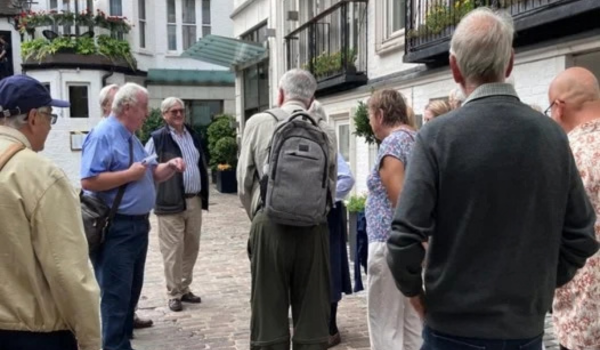
A group of 21 – including our esteemed guide Lance Whitehouse – met promptly at 11 am on the edge of Green Park to begin our walk through this renowned and historic ‘village’ in the City of Westminster.
Lance, as ever, entertained us richly with unexpected details, anecdotes and witty asides. A feature of the visit noted by several of us in the WhatsApp chat that followed the visit was that this was a neck of the woods which many of us thought we knew really well, but were constantly made aware of the depth of our ignorance and the extent of our unobservance!
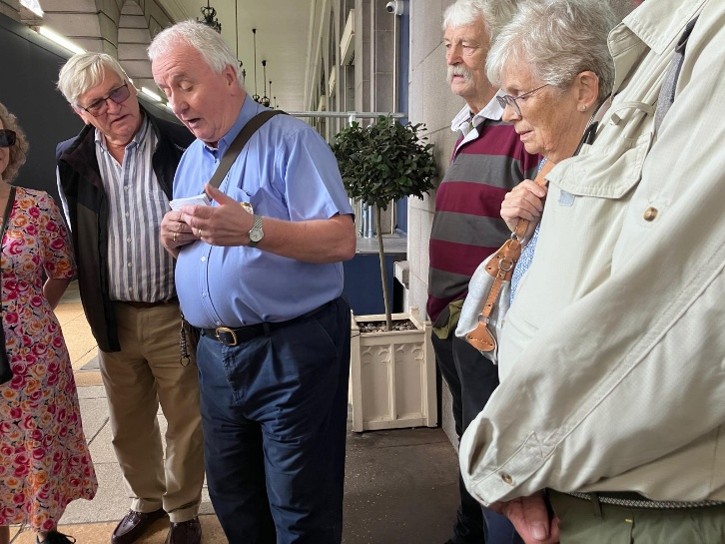
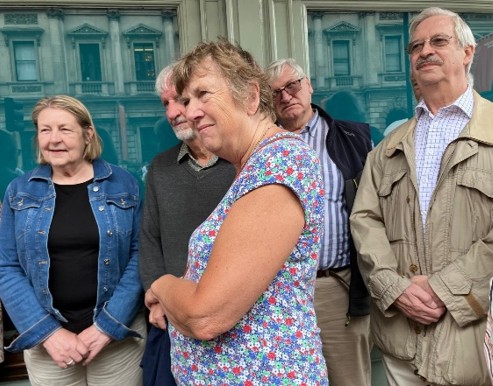
From the following pictures, our attentiveness as we hung on Lance’s every word, is apparent.
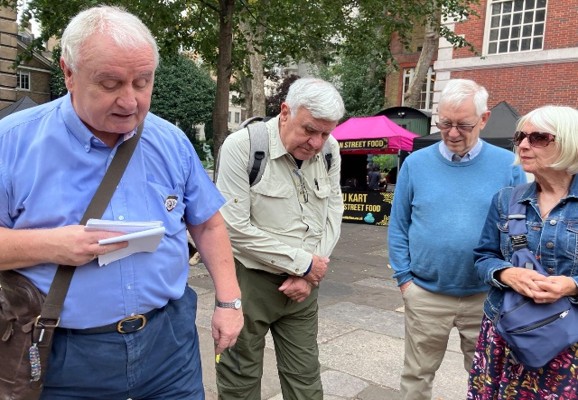
Piccadilly
Past the Ritz we walked and then paused outside Fortnum & Mason - spurning the chance of sampling its famous teas, but learning the intriguing fact that this famous landmark commenced with Mr Fortnum selling candles as well as discovering the derivation of Piccadilly: a large 16th–17th‑century collar, with the name applied to London’s Piccadilly after tailor Robert Baker built “Piccadilly Hall” around 1612, using wealth earned from making the collars. We then came to Piccadilly’s famous church, St James’s – a church noted for its outreach as well as its fine interior.
Passing through which, we were surprised to find ourselves in Jermyn Street, with its famous shops for fine shirts, shoes and suits, as well as Paxton and Whitfield’s amazing cheeses.
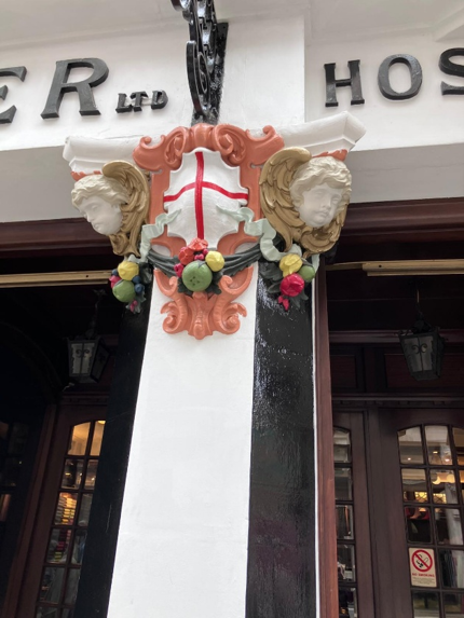
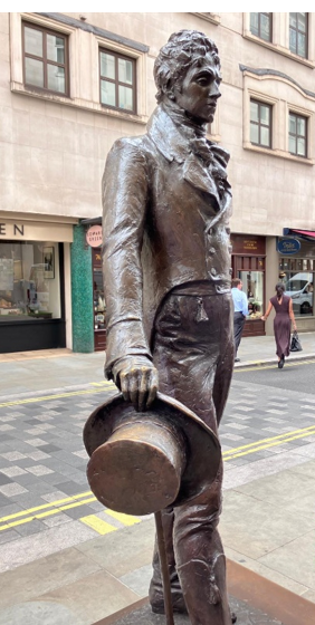
Jermyn Street
We admired the statue of the person who most personifies Regency elegance, fittingly positioned in this street which epitomises high fashion -learning as we did so that his famed friendship with the Prince Regent, future George IV ended badly, causing the now heavily indebted Brummell to flee to France and live the rest of his life in exile: a sad end for one who had been a brilliantly precocious young man and had had an extraordinary influence over men’s clothing.
St James’s Street and environs.
We turned from Jermyn Street into St James’s Street, which has been described as follows: ‘as London’s political and royal influence expanded, the street quickly became a prestigious address for aristocrats, diplomats, military officers, and successful merchants. Over the centuries, it earned a reputation as one of Britain’s most refined and exclusive locations.’ Some of London’s most famous clubs are there, including White’s, the Carlton, Brooks’s and the Royal Overseas League.
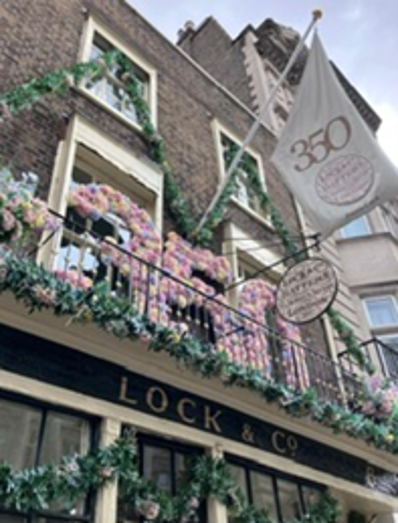
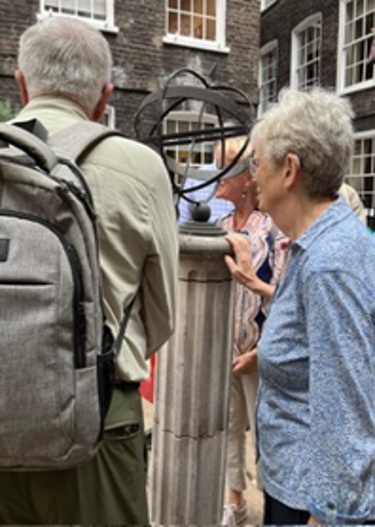
We also paused and admired the highly-decorated retailers Lock and Co (the royal family’s go-to Hat Shop) as it currently celebrates 350 years in the same establishment. This was the precursor to one of the more surprising of Lance’s many surprises: the smallest public square in London, once home to the Texan legation and part of the considerable chunk of St James owned by the long-established (and very fine) wine merchant Berry Bros.
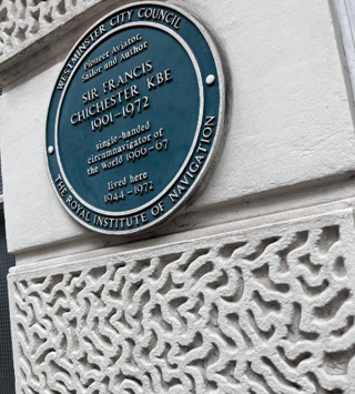
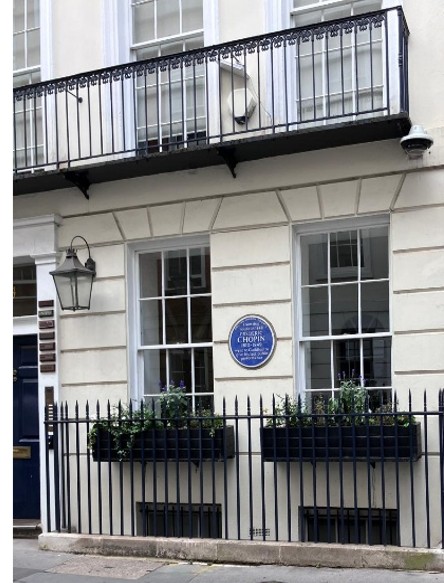
Finally we dived off St James’s Street, and found some delightful terraced houses with some extremely celebrated former inhabitants: Sir Francis Chichester lived at no 9 and the composer Chopin at No 4 St James’s Place.
Blue Ball Yard
We learned that Blue Ball Yard was developed from a green field site by King Charles II, evidently to provide accommodation for some of his female acquaintances and sold in 1672 to quench the ire of Catherine of Braganza. Not for the first time, we were reminded that the imprint of the royal family (as well as that of numerous exceptionally well-heeled individuals) was extremely strong in the area, not least with its plethora of what are still known widely as Gentlemen’s Clubs, although most of these have now become fully open to female members: we had gazed along the right-hand side of Pall Mall, noting the Oxford and Cambridge, RAC, Reform, Travellers’ and Athenaeum in rapid succession.
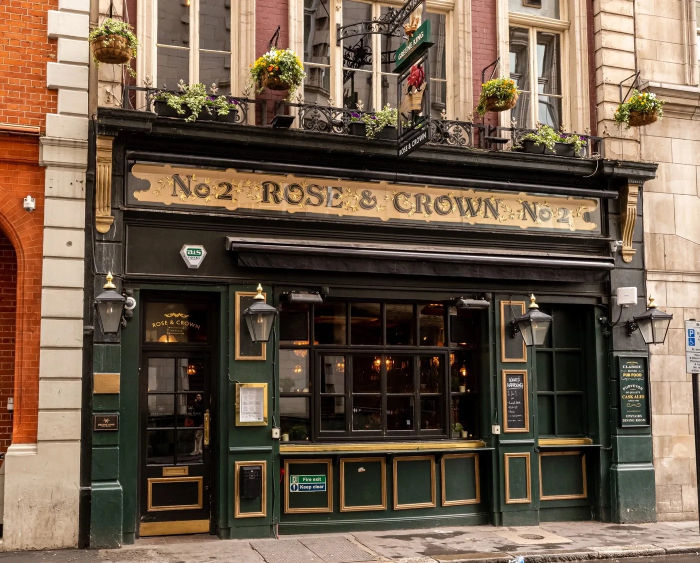
From Blue Ball Yard, it was a relatively short hop to our extremely well-chosen lunch venue, also dating from the 17th Century: the Rose and Crown in Old Park Lane, where such was the conviviality that we were amazed to find that we were so close to the scheduled end of the tour that we called a halt to proceedings.
Our Chair Denise was rightly very warm in her thanks to the inimitable Lance Whitehouse for another exceptional tour, and to Vice-Chair John Eaton for his impeccable organisation of this now well-established annual City walk.
Pam and David Taylor